About Me
About Me
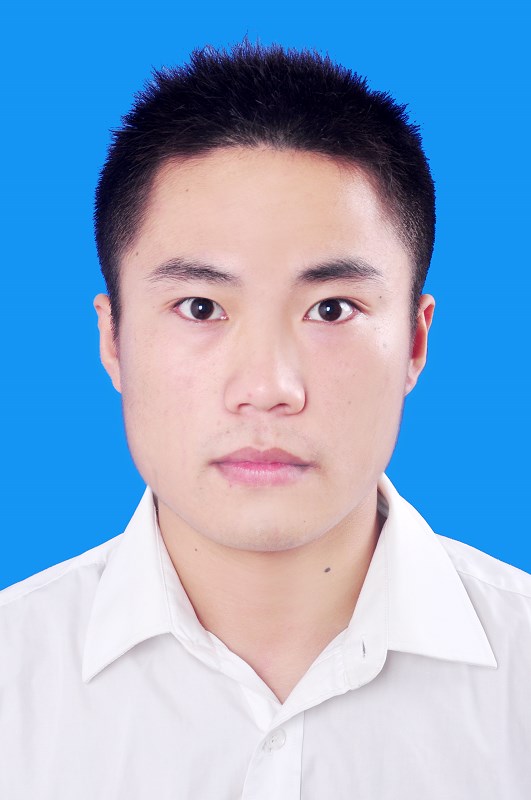
I am Yun Chu, a research scholar at Hainan University. My work sits at the intersection of Traditional Chinese Medicine (TCM), meridian/channel theory (经络学), and artificial intelligence — exploring how classical TCM knowledge and modern computational methods can mutually illuminate and strengthen each other.
Previously, I applied deep learning to respiratory sound classification and event detection, advancing the intelligence of respiratory auscultation. This work continues to inform my broader interest in objective, quantitative assessment of physiological signals within a TCM-inspired framework.
Personal Philosophy
I am deeply fascinated by the philosophical traditions of Confucianism, Buddhism, and Taoism in Chinese culture, particularly Taoist and Buddhist teachings. I also hold respect for Christianity and all religions that guide humanity toward kindness. I firmly believe that science and religion should harmoniously coexist, much like the two legs of a human body—mutually supportive and complementary.
Vision
- Integrate Chinese Medicine Meridians with Deep Learning: Explore the synergy between Chinese Medicine’s meridian system and graph neural networks in deep learning.
- Model Energy Distribution via Thermal Imaging: Use thermal infrared imaging to capture the human body’s energy distribution as heatmaps, then apply deep learning energy models for analysis.
- AI-Driven Modeling of Chinese Medicine and Celestial Theories: Investigate Chinese Medicine’s Five Elements theory and the influence of celestial bodies on human health through artificial intelligence.
A Story
“To act against the root is to harm the foundation and destroy the essence. Thus, the interplay of yin and yang and the cycles of the four seasons govern the birth, growth, and demise of all life. Defying these rhythms invites disaster; aligning with them prevents calamity. This is the Way. The wise follow it; the ignorant disregard it. To obey yin and yang is to embrace life; to defy them is to court death. Thus, the sage treats illness before it arises and restores order before chaos erupts. To medicate only after disease takes hold, or to govern only after rebellion begins, is like digging a well when thirst strikes or forging weapons mid-battle—too late!”
When King Wei asked the renowned physician Bian Que, “Your three brothers all practice medicine—who is the most skilled?”
Bian Que replied, “My eldest brother is the best, my second brother is next, and I am the least capable.”
The king asked, “Then why are you the most famous?”
Bian Que explained, “My eldest brother treats illness before symptoms appear, so his skill remains unknown. My second brother intervenes at the first signs of disease, earning only local acclaim. I treat severe illnesses with dramatic methods—needles, herbs—so my reputation spreads far and wide.”
Chinese Medicine is akin to the eldest brother: Its highest practitioners prevent disease before it manifests, their mastery often unseen.
The concept of the “superior physician” dates to the pre-Qin text Guoyu: “A superior physician heals the nation; a middling one heals the people.” This underscores that true mastery lies in understanding grand patterns and subtle details alike.
Tang Dynasty physician Sun Simiao, building on the Huangdi Neijing’s wisdom—“Sages treat not illness but the absence of health, not chaos but its precursors”—categorized medicine into three tiers:
- Superior physicians prevent disease at its latent stage.
- Middling physicians treat early symptoms.
- Inferior physicians combat full-blown illness.
“Superior physicians cure the undiseased; middling ones treat the impending; inferior ones address the manifest.”
Wish
In my lifetime, I hope we can empower Chinese Medicine with the wings of artificial intelligence, elevating it for the benefit of all humanity.
Personally, I believe most illnesses stem from root causes—erroneous thoughts or harmful habits. By observing external symptoms, we must reflect inward to identify these root imbalances. Healing begins by correcting our mindset and lifestyle. Gentle, holistic methods should come first; surgery is a last resort. The human body, as divinely crafted, has no superfluous parts—each organ and system serves a purpose.
I wish we can cherish this wisdom and heal with both ancient insight and modern innovation.
This website is built with Academic Pages, hosted on GitHub Pages.